Waldorf Crema
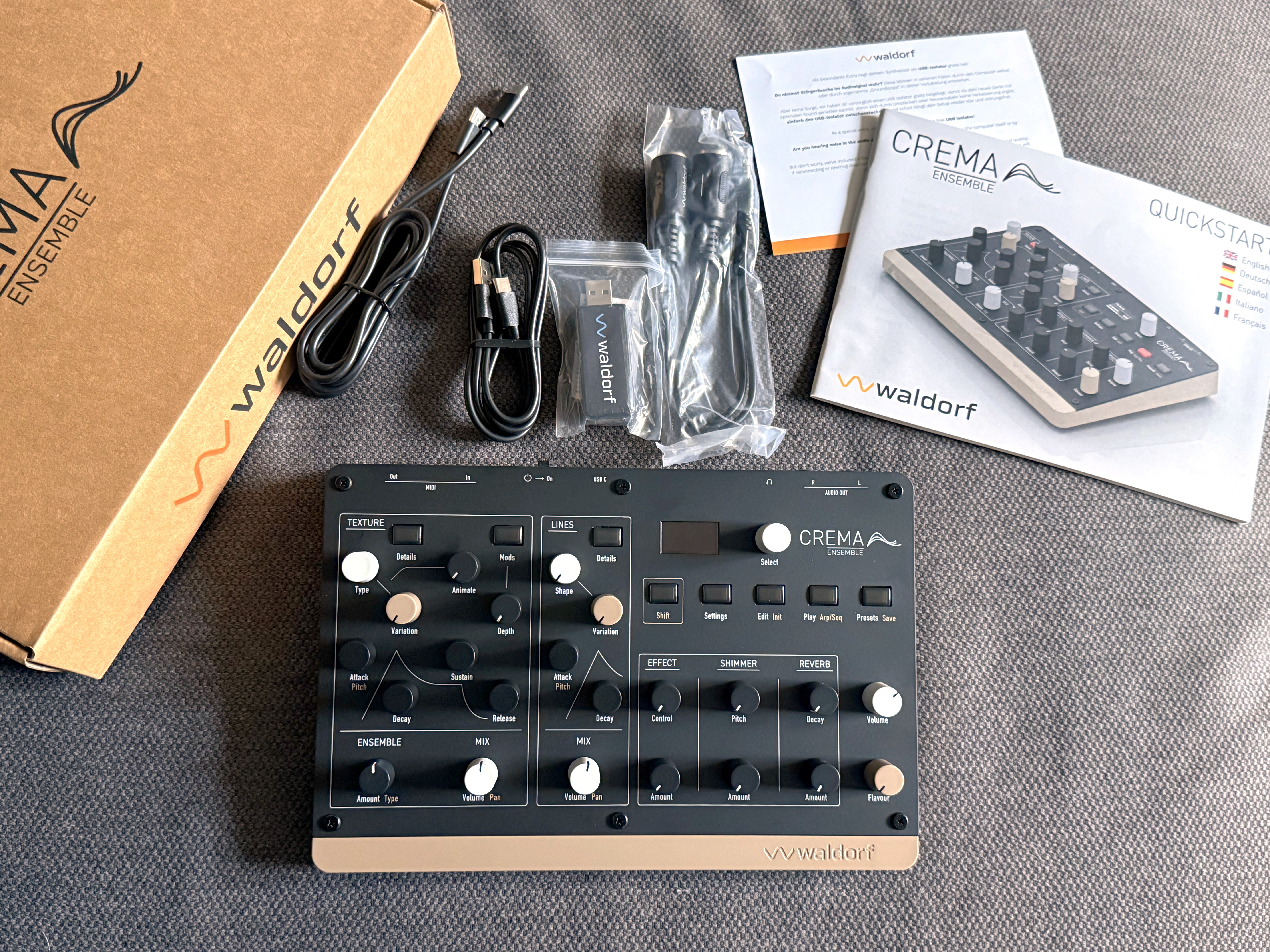
This is a kind of Steichfett MK II. Metal front panel. 24 knobs (incl. 8 encoders), 8 buttons, a bit more than 1" OLED display, MIDI in & out via 3.5 mm TRS, USB-C powered (also MIDI connection).
The changes to the Streichfett:
- about twice the number of knobs to edit the addition parameters. Some of them got a Shift-Function.
- Full ADSR for the string section
- Alternativ to string section: wavetable synth with filter and three ADSRs (filter, volume, wavetable position).
- Poly Saw (sine to saw waveshape)
- Poly Square (sine to square)
- Org 1
- Org 2
- Org 3
- Resonant (PPG wavetable #0 / Waldorf #1)
- Mallet (#2/#3)
- Bellish (#4/#5)
- Add Harm (#9/#10)
- Clipper (#13/#14)
- Robotic (#20/#21)
- ResoHrms (#24/#25)
- FmntVocl (#27/#28)
- SawSync2 (Waldorf #34)
- SinSync1 (#39)
- Distord (#45)
- Vibes (#63)
- Alternativ to string section: 4 OP FM poly synth with filter and two ADSRs (volume, FM modulation) there are six FM algorythms amd modulations available as template:
- FM Bell
- FM E-Piano
- FM Brass
- FM Bass
- FM Wood
- FM Organ
- You can pan the Texture ("Strings" on Streichfett), Lines ("Solo"") and the Ensemble FX in the stereo field
- The phaser was extended to a multi FXs containing 3 chorus types, 3 flanger types, 3 phaser types, 5 drive modes, 3 delay types. The tremolo of the Streichfett is also included here and can now be used for both sections.
- You can route the multi FX (called FX1) and the reverb (FX2) either in serial or parallel. And you can choose in the Details menues of both section, whether a section is routed to FX1, FX2 or directly to the output.
- The reverb got a separate shimmer and got addition parameters in the shift functions
- Way more slots to store sound to
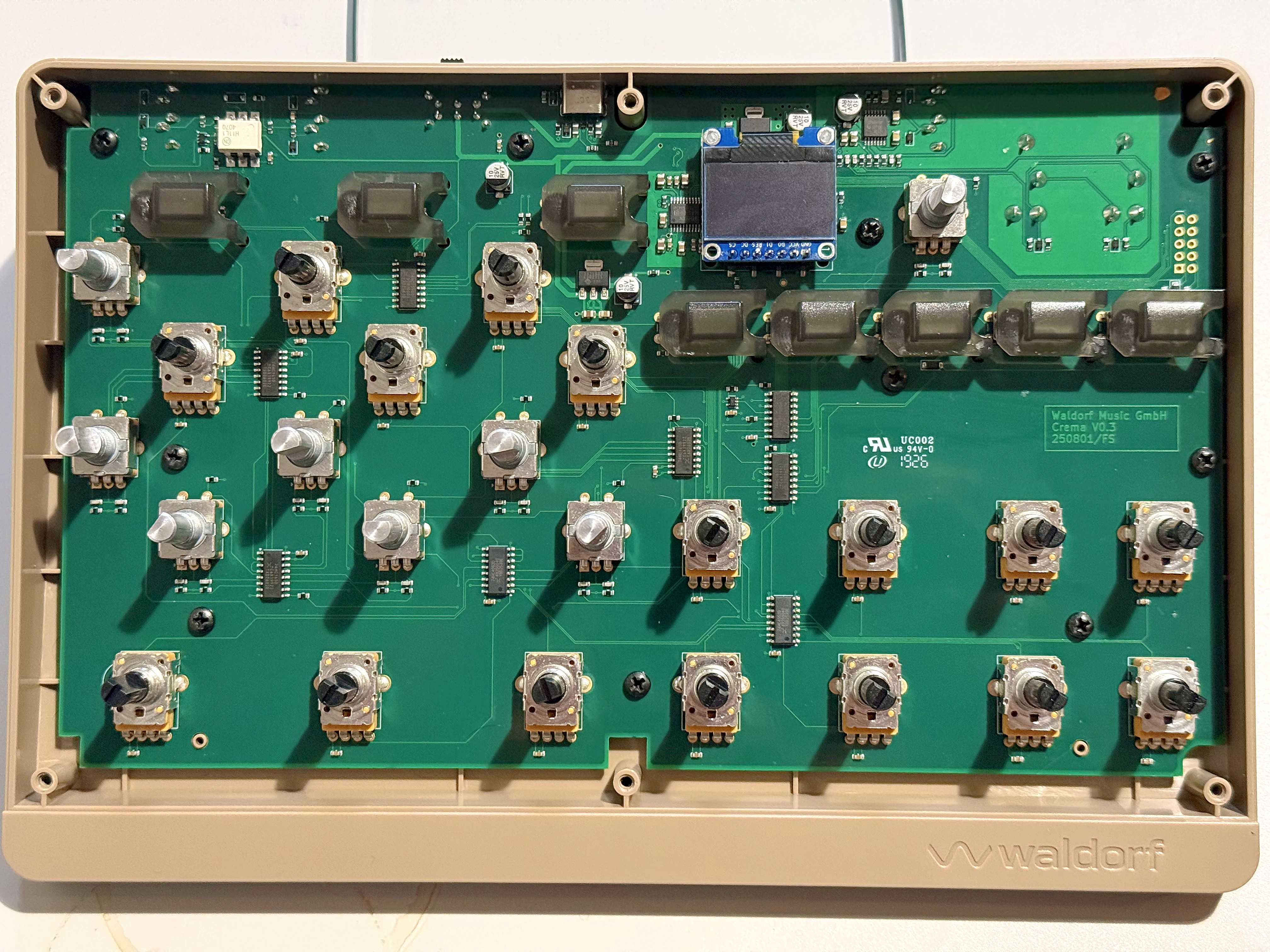
As expected: not full of electronics:
- A Burr-Brown PCM5102 DAC with PLL and 32-bit, 384 kHz PCM Interface. It accepts 16, 24, and 32 Bit audio data. But we don't know the actually bit width.
- Texas Instruments TPA6319B2 25 mW stereo headphone driver
- The display covers a cpu with a ball like logo. See picture below.
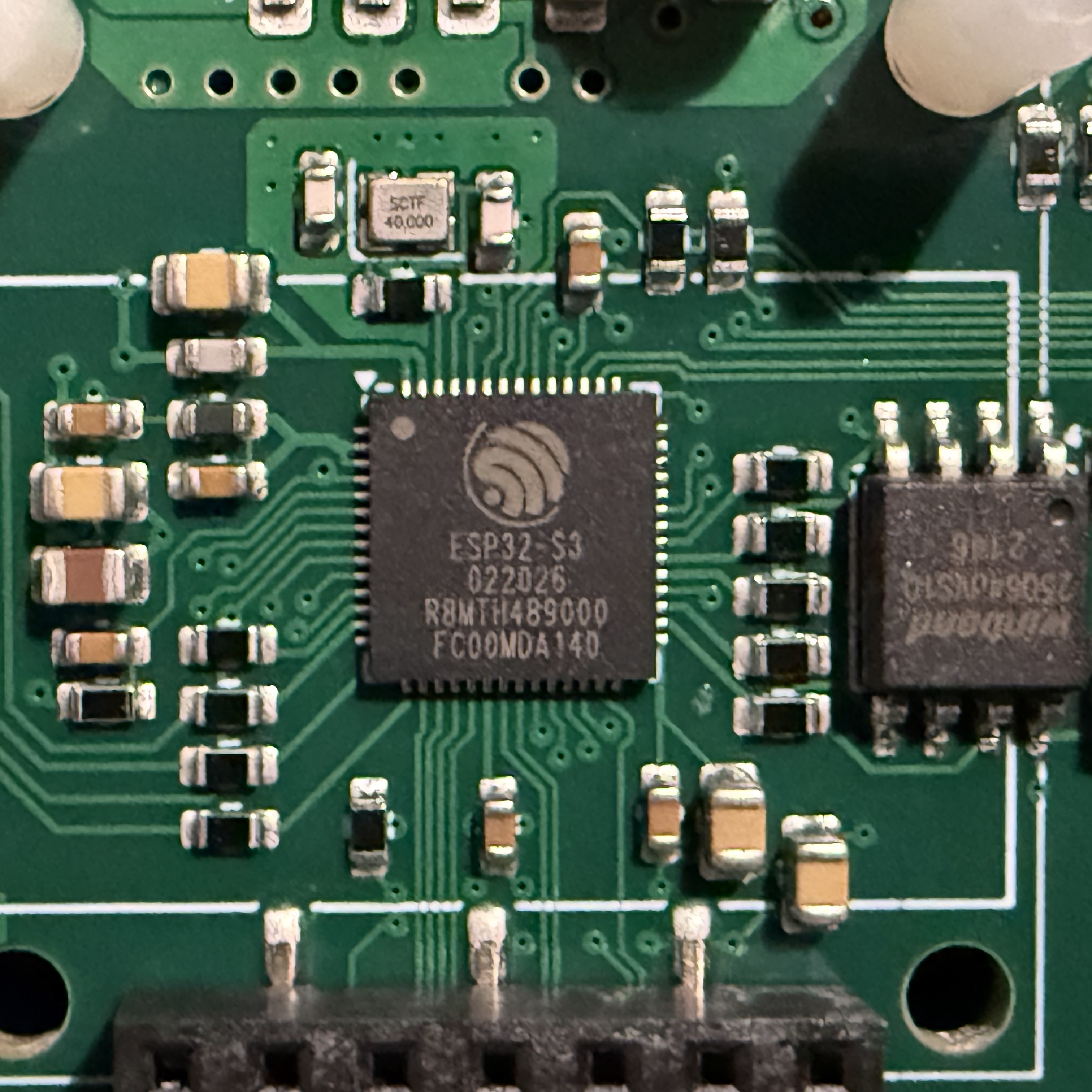
The ESP32-S3 system on a chip is "hidden" under the display.